Nutrition
Basic Facts
Common Ground
Basketball, football, swimming,tennis, volleyball and track all have one thing in common, their athletes all must be in good physical condition, with an emphasis on both aerobic and anaerobic function, so their dietary needs are quite similar.
What to know
It's important for them to balance their diet among in terms of carbohydrates, proteins, vitamins, minerals, and trace elements.

Losing weight
For an athlete looking to lose weight again needs to eat a balanced, nutritious diet; the key is simply to create a negative caloric balance of 7,500 calories per week if the goal is to lose 1 kilogram a week.

Building Muscle
To build muscle, maximize the benefits of training, and achieve natural muscle growth, an athlete must ensure adequate intake of both carbohydrates and proteins; this prevents the body from having to resort to glycogenolysis to meet the demands of the workout.
Nutrition for Track Athletes
- As a track athlete, your calorie and dietary needs depend on your training and the event in which you compete in.
- However, every track athlete must get about 60-70% of their calories from carbohydrates to support their training.
- Protein is essential for muscle recovery, so athletes must focus on lean sources such as fish, chicken, eggs, beans, tofu and low fat dairy
- Including healthy fats such as nuts, seeds, avocado and olive oil for long time energy, hormone production and overall health
- Before a competition, athletes must eat a balanced meal 2-3 hours before ,emphasizing on carbohydrates and protein
- If a snack is requested, it is recommended that athletes consume something like a banana, applesauce, crackers, pretzels or white bread 30 minutes before exercise
- For recovery, athletes should eat something like yogurt with fruit, a turkey sandwhich, peanut butter and a banana or a smothie 60 minutes after your exercise
- Hydration is important before, during and after exercise
- Paying attention to iron intake is crucial, especially for female athletes.
- Eat foods such as milk, yogurt, and orange juice to keep up an intake of calcium and vitamin D to support bone health
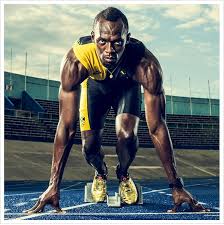


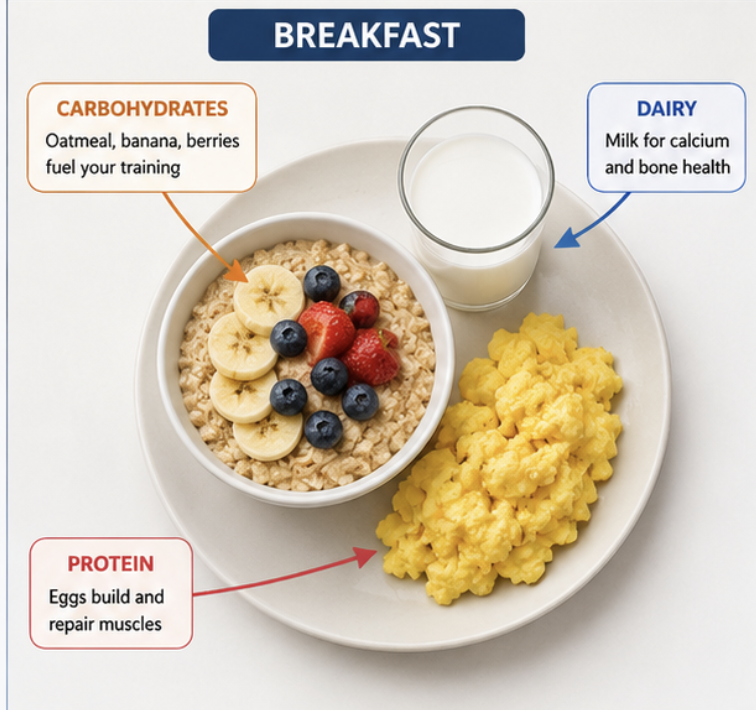
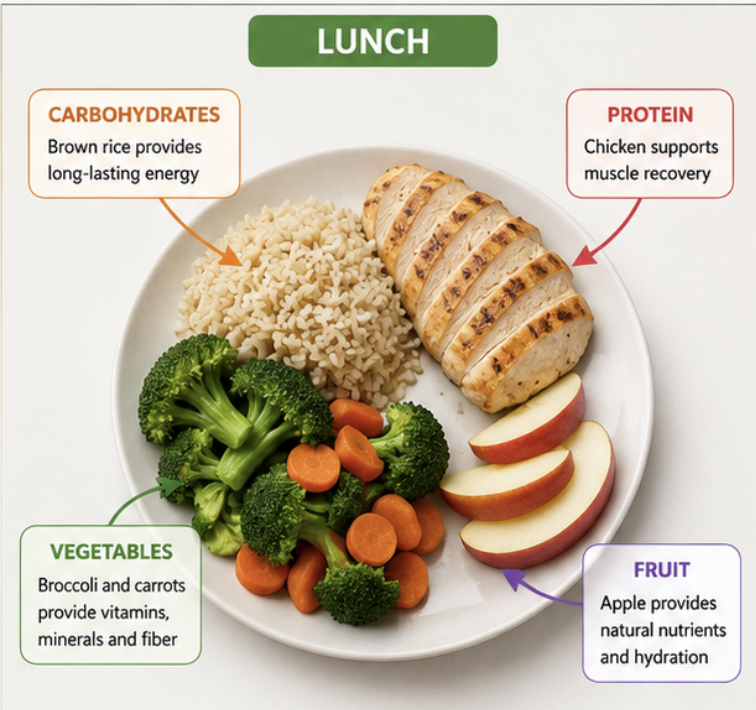
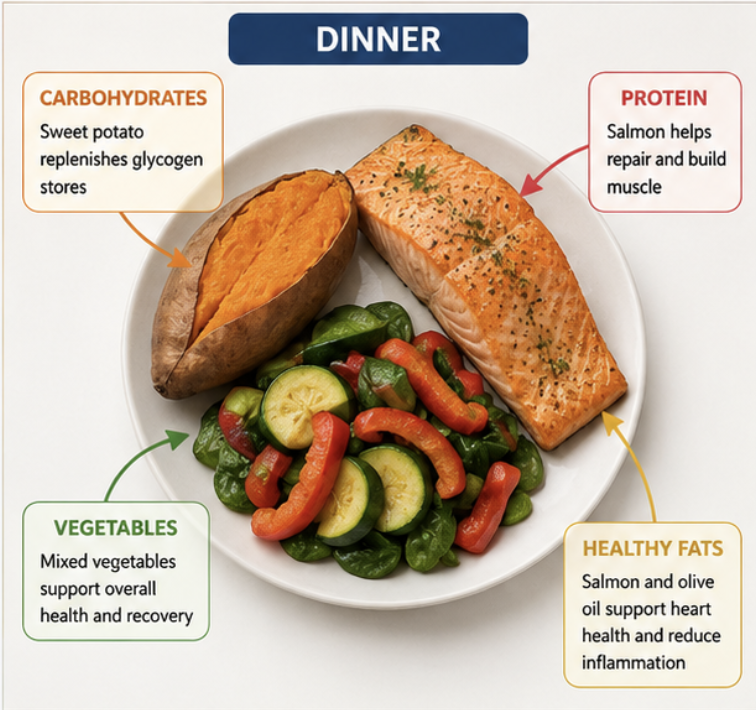
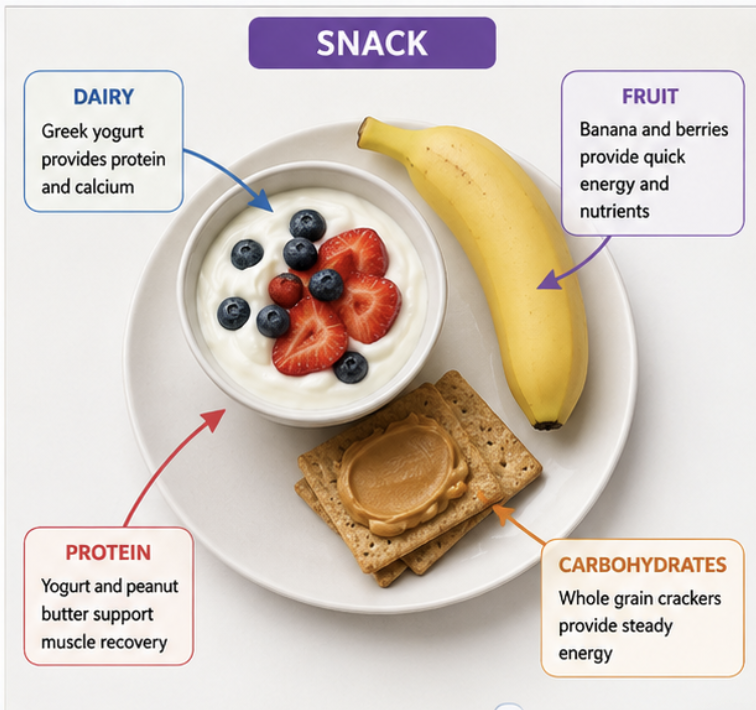

caption 1 
caption 2 
caption 3 


Nutrition for Footballers
- Footballers must balance their diet among in terms of carbohydrates, proteins, vitamins, minerals, and trace elements.
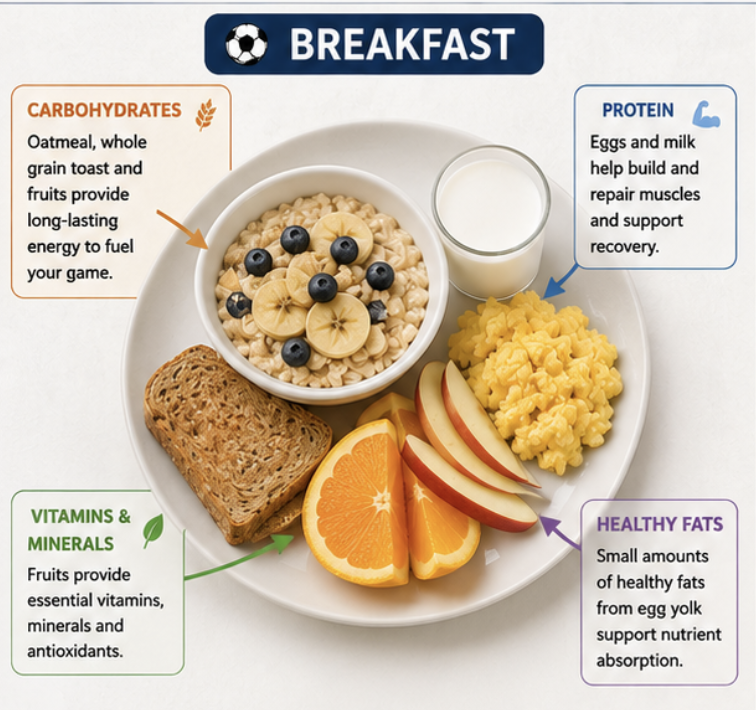
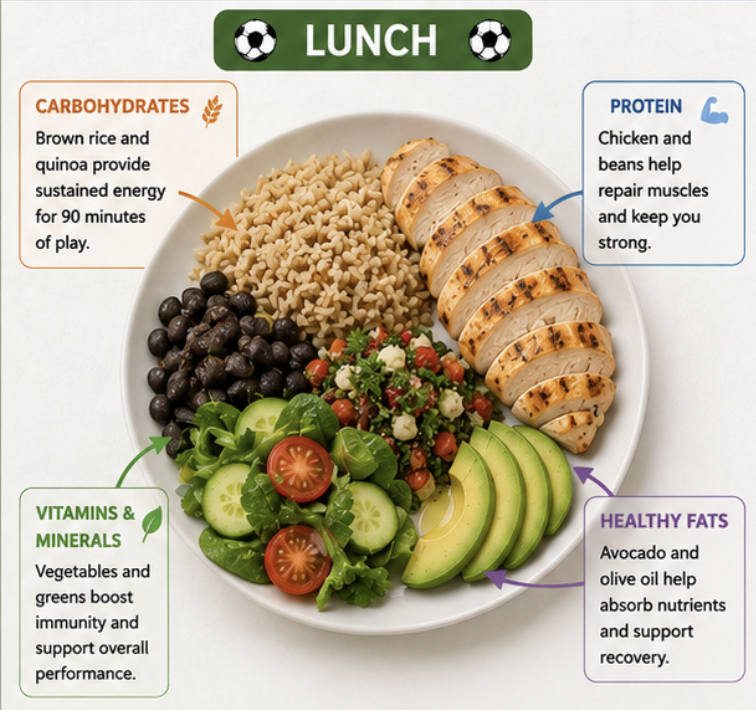
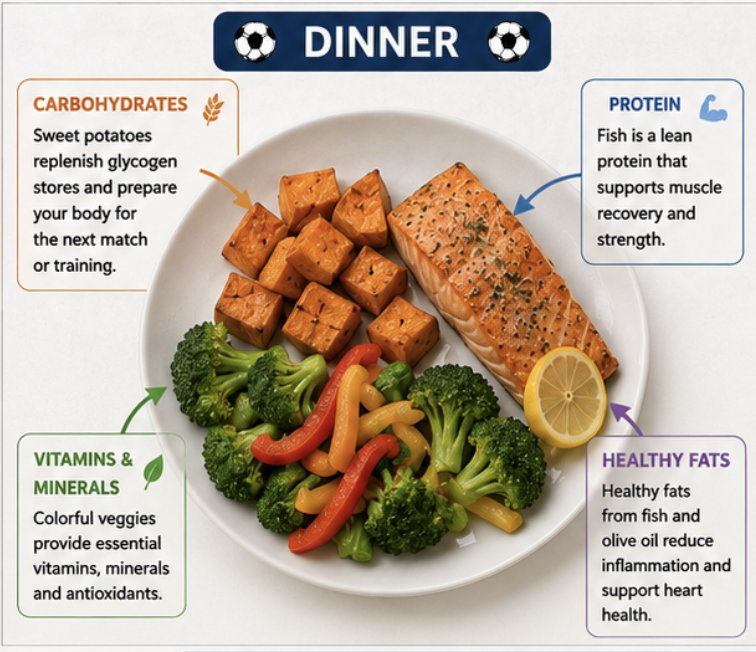
- Crbohydrates should make up 50-70% of a footballers daily diet. They power his sprints and keep energy levels up for 90 minutes. Good sources include brown rice, sweet potatoes, pasta, whole grain bread oatmeal, and fresh fruits like bananas, apples and oranges.
- Protein is crucial as it supports recovery and muscle strength. Foods such as chicken, fish, eggs, dairy, beans, lentils, quinoa and hummus are great protein sources that should be included. Football players must aim for 3-5 oz of animal protein or 1-2 cups of plant based protein per meal.
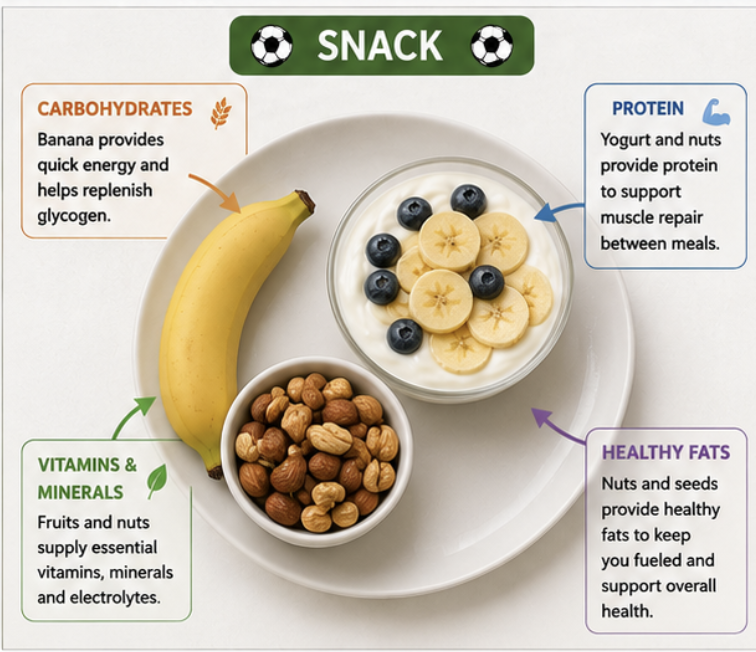
- Healthy fats help absorb nutrients. Great sources are olive oil, nuts, seeds, avocado and dairy products. Portions should be small and fats from fried foods and processed snacks should be avoided
- Foods such as fast food, heavy cream sources, pastries and fried foods in general are filled with empty calories, are slow to be digested and work against players on the field.
- Pre game meals should be eaten 3-4 hours before kickoff. A goood pre-match meal is grilled chicken, roasted vegetables and a baked potato. A good snack 1-2 hours before is a banana or a granola bar
- Post match snacks should be eaten 30-60 minutes after the final whistle. Greek yoghurt with granola and fruit, a smoothie with protein powder and fruit, or nut-butter with crackers is recommended.
- Water is crucial, so a footballer should consume about half of their bodyweight in ounces of water every day